
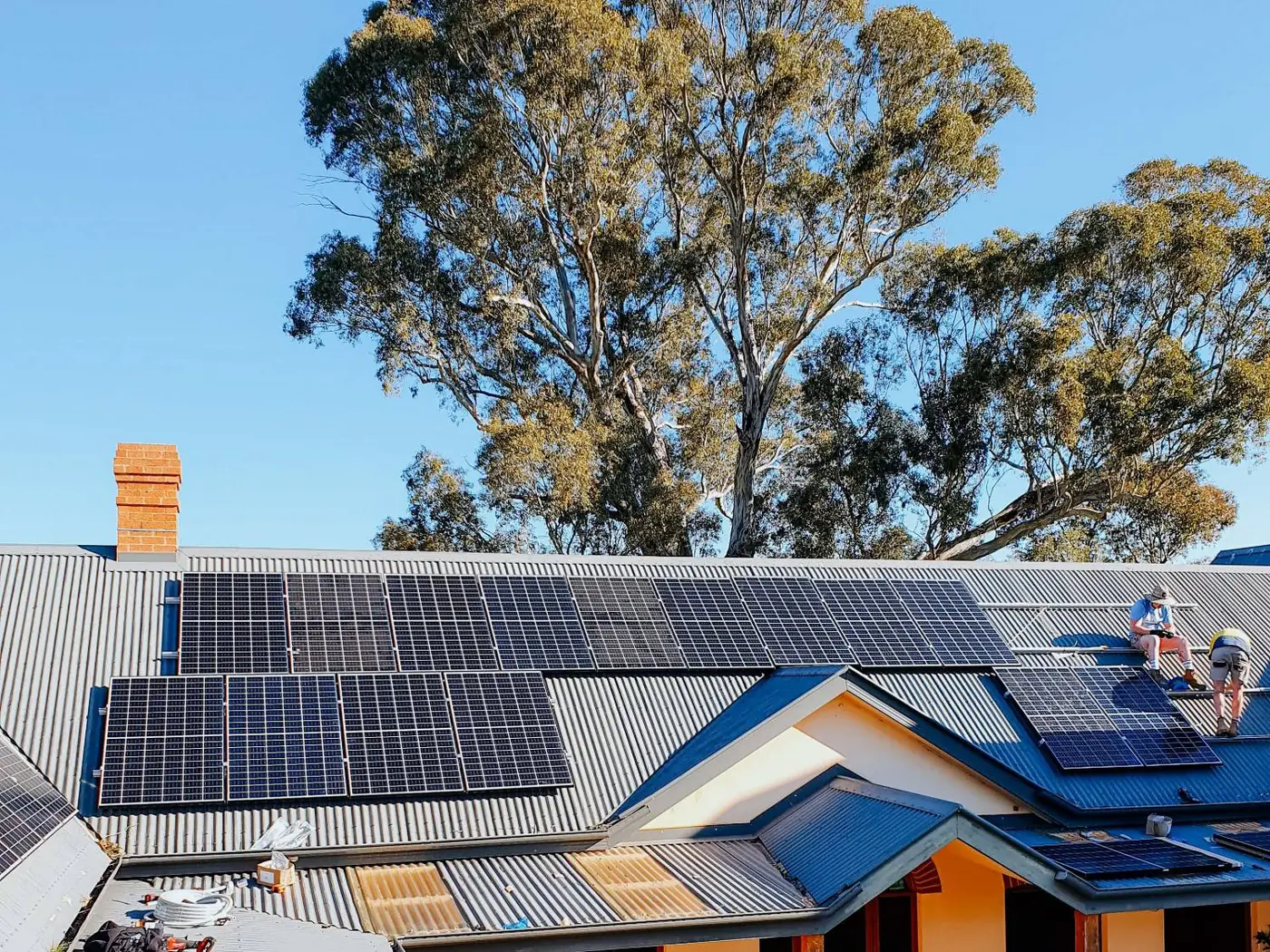
Ainslie, Braddon and the rest of Canberra's inner north have some of the city's oldest housing, its most mature street trees, and a growing number of apartments and townhouses. Each of those changes how a solar system should be planned. This guide covers the inner-north specifics. For general installer vetting, see our guide to choosing a CEC-accredited installer. If you already know you want a quote, see our Canberra solar installation page.
ACT network and tariffs
The inner north is on the Evoenergy network, so ACT connection rules and ACT retail tariffs apply. Our savings calculator has an ACT setting that uses current ACT benchmark rates. Export limits are set per connection, so ask your installer to confirm your export limit with Evoenergy in writing as part of the quote.
Heritage-listed homes
Some inner-north homes and places are on the ACT Heritage Register. If yours is, solar is usually still possible, but you may need ACT Heritage Council agreement before installation, and the Council has a say in where panels go.
- Check the register for your address first. Don't rely on what the neighbours did. Contact the ACT Heritage Council if you're not sure.
- Expect panels on rear or side roof slopes rather than the street-facing slope, mounted flush to the roof, in a dark or neutral finish. That is the general direction of the Heritage Council's published guidance.
- Allow time for approval before you book an install date.
A rear or side slope can still produce well. An east-west split array often gives a flatter output across the day, which suits households that use most of their power in the morning and evening.
Mature trees and shade
The inner north's big trees are one of its best features, and the biggest single cause of poor solar output there. Before you get a quote:
- Insist on a shade assessment on site, not a satellite image. Winter shade matters most, because that's when the sun is lowest and shadows are longest.
- Don't plan on removing or heavily pruning a large tree. In the ACT, many large trees are protected, and work on them can need approval. Check before you assume.
- Ask about panel-level electronics. Microinverters or optimisers limit the loss when only part of the array is shaded. On a partly shaded inner-north roof, they are often worth the extra cost.
Older homes: switchboards and roofs
- Switchboards. Many older homes still have an old switchboard. It often needs an upgrade before a modern inverter can be connected. A good quote finds this at the inspection, not on installation day.
- Roof condition. Old tiles, or old iron with worn fixings, should be checked before panels go on. Repairs are much cheaper before the array is installed than after.
- Future electrification. If you plan to replace gas heating, add a heat pump or buy an EV, tell your installer now. Leaving room in the inverter and switchboard is cheaper than a second visit.
Apartments and townhouses in Braddon
In apartment and townhouse complexes, the roof is usually common property. That means:
- You will normally need owners corporation approval before anything goes on a shared roof. Raise it early, because approval can take a meeting cycle.
- One shared system may make more sense than individual ones. A system that powers common areas such as lifts, lighting and car-park ventilation can cut levies for every owner. Individual systems need roof space and cable routes for each unit.
- Townhouses with their own roof are simpler, but check your complex's rules on external changes first.
What it costs
We price inner-north jobs on the same fitted rate we use across our service area: $824/kW installed for panels, inverter, mounting and commissioning, plus about $429/kWh for a battery. The method and worked examples are in our pricing breakdown. Switchboard upgrades, roof repairs and panel-level electronics are quoted separately after the inspection.
| System size | Typical inner-north property | Indicative cost |
|---|---|---|
| 6.6 kW | Cottage or townhouse | $5,438 |
| 8 kW | Family home with a split or shaded roof | $6,592 |
| 10 kW | Larger home, or all-electric heating | $8,240 |
Incentives change from year to year and are applied at the quote stage. Our rebates and STCs guide explains how they work in the ACT.
Get an inner-north quote
Free site inspection with a shade assessment, fixed itemised quote, CEC-accredited crew. Ainslie, Braddon, Turner, O'Connor, Dickson, Reid and surrounds.
Five questions to ask before you sign
- Have you checked whether my home is heritage-listed, and what approval that needs?
- Is the generation estimate based on an on-site shade assessment, including winter shade?
- Does my switchboard need an upgrade, and is it in this quote?
- Would microinverters or optimisers help on my roof, and what do they add to the price?
- Will you confirm my export limit with Evoenergy in writing before I sign?
To work through system size yourself first, read our residential sizing guide. When you're ready, call 0422 292 551 or request a quote.