
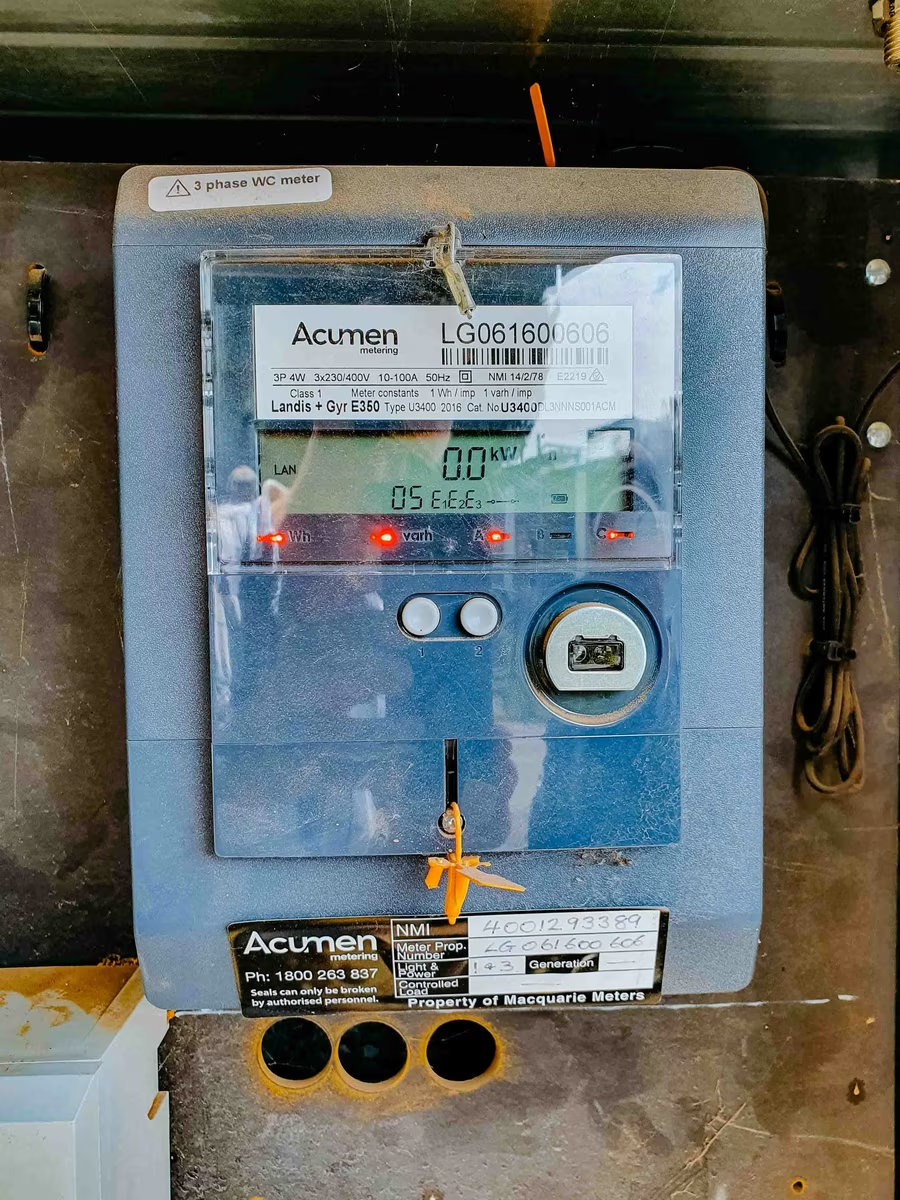
The inverter converts the DC power your panels generate into AC power your home or business can actually use, and it is the component most likely to need replacement within a system's lifetime — typically before the panels themselves. We supply and install inverters as part of a new system, and we replace or upgrade inverters on existing systems, including ones we did not originally install.
Inverter types
- String inverters. The standard choice for most residential and commercial grid-connect systems — one inverter serving a string of panels.
- Hybrid inverters. Built to manage a battery alongside solar generation, used when a battery is part of the system now or planned for later.
- Off-grid inverter/chargers. Built to handle 100% of household load with no grid to lean on, sized against your peak simultaneous draw rather than your average — see our off-grid guide for how this differs from grid-connect sizing.
Sizing an inverter correctly
An undersized inverter clips your system's output during peak generation, wasting capacity you paid for. An oversized one costs more without a matching benefit. We size inverters against your actual panel array and, on off-grid or hybrid systems, your peak simultaneous load — the moment a kettle, power tools and the fridge compressor all draw at once, for example — not just an average figure.
Single vs. three phase inverters
Single phase supply typically supports inverters up to somewhere around 5-10kW, with the exact ceiling set by your network's export limits. Three phase supply supports larger inverters without hitting those limits, and is standard on most commercial sites and larger homes. We confirm which supply your property has during your free site inspection, since it directly affects what inverter size makes sense.
Replacing a failing inverter
An inverter approaching end of life often shows warning signs before it fails completely: reduced output, error codes, or unusual noise. Replacing it before a full failure avoids weeks of lost generation while you wait on a diagnosis and a part. If you are unsure whether your inverter is a warranty issue or a straight replacement, we assess this as part of a service visit before recommending anything.
Inverter warranties
Inverters typically carry a shorter manufacturer warranty than panels, reflecting that they are the component most likely to need servicing or replacement — though extended warranties are often available for an additional cost. We walk you through the specific warranty terms for the product in your quote before you commit to anything.
Monitoring and knowing your inverter is healthy
Most modern inverters include an app or web dashboard showing real-time and historical generation. This is your earliest warning sign of a developing fault — a gradual, unexplained drop in output over weeks is far easier to act on than discovering the problem months later on your power bill. If your existing inverter does not have monitoring, or the monitoring has stopped reporting, that is worth raising with us directly rather than assuming everything is fine because the panels are visibly still there.
Product selection
We install CEC-approved inverters from established manufacturers, matched to your system size and budget rather than defaulting to a single brand regardless of fit. A larger, well-known manufacturer generally means better local parts and service support if something does go wrong years down the line — worth weighing against a cheaper, less established option even where the sticker price looks appealing upfront.
Upgrading an inverter without a full system replacement
If your panels are still performing well but your inverter is aging or undersized for a planned battery addition, replacing just the inverter is often possible without touching the panel array. This is a common path for households adding a battery years after their original solar install, since older inverters frequently were not built with battery integration in mind. We check panel compatibility with your proposed new inverter before quoting, rather than assuming everything will connect cleanly.
Inverter cost as part of a system quote
The inverter is included in our per-kW system pricing rather than a separate line item, so there is no hidden add-on cost when you compare our quotes to a per-kW figure elsewhere. If you only need a standalone inverter replacement — panels already installed, no other work required — we quote that separately based on the specific inverter and labour involved, not the full-system per-kW rate.
Inverter acting up, or planning a new system?
We size and supply inverters correctly the first time — or diagnose an existing one before recommending replacement.