
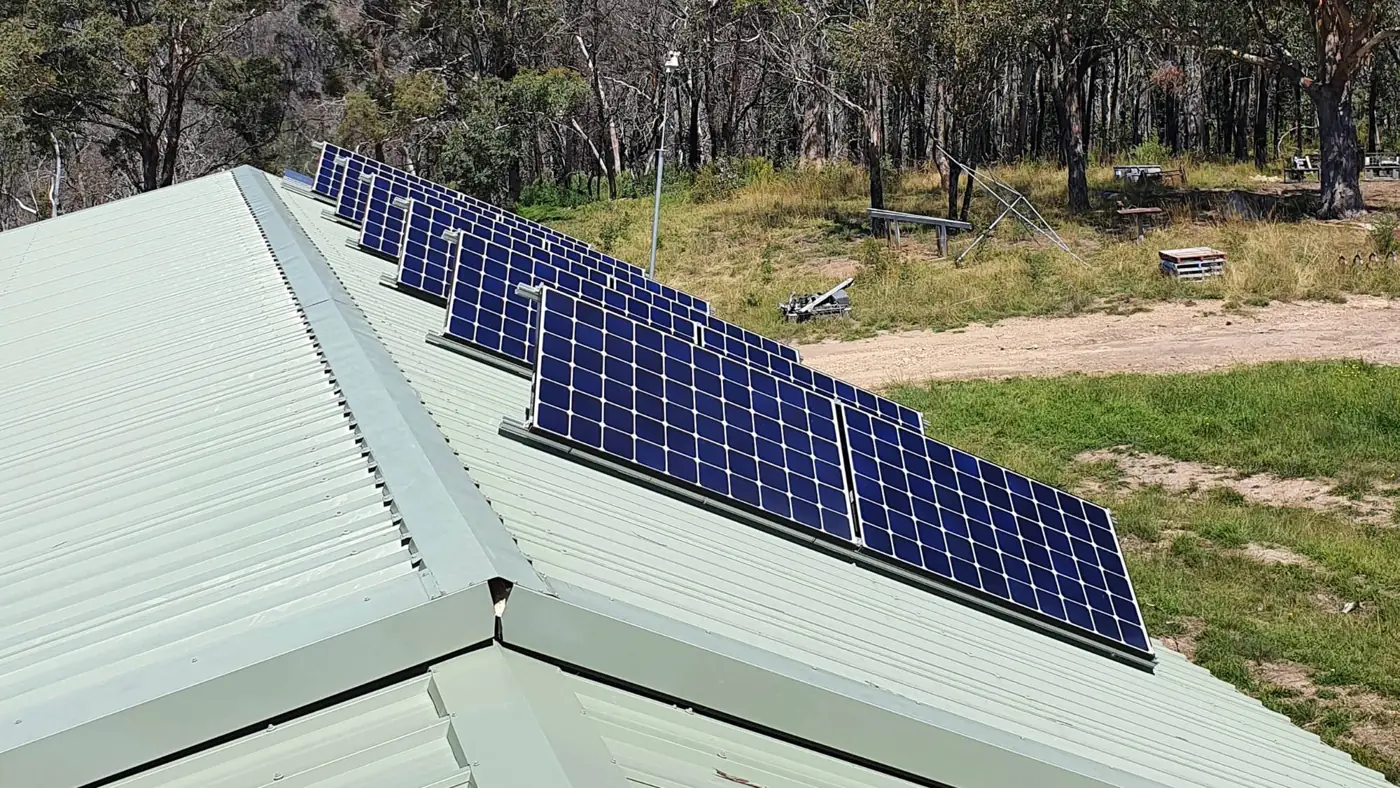
Until now, the upfront federal solar discount had a hard ceiling. A system up to 100kW earned Small-scale Technology Certificates (STCs) that came straight off the quote. Anything bigger fell into the large-scale scheme, which pays out over time rather than up front. That gap hit exactly the businesses with the most to gain: warehouses, farms, cool rooms, workshops, schools and clubs with big roofs and big daytime loads.
The federal government announced in August 2026 that it would expand the scheme to 1MW. The Clean Energy Regulator (CER) has since confirmed that the Renewable Energy (Electricity) Regulations 2001 have been amended. Eligible solar systems between 100kW and 1MW installed from 1 October 2026 can now create STCs. The CER calls this new band "mid-scale solar".
The STC ceiling has risen tenfold, from 100kW to 1MW, for eligible solar PV systems installed from 1 October 2026. The government's own estimate is a saving of roughly 20% on installation costs for mid-sized commercial systems.
What actually changed
- New size band. Solar PV systems larger than 100kW and up to 1MW can now create STCs. The CER calls these "mid-scale" systems.
- Start date. The change applies to eligible systems installed on or after 1 October 2026. "Installed" means the testing and commissioning date on the certificate of electrical compliance, not the date the contract was signed or construction started.
- Fixed 5-year deeming period. Mid-scale systems get a fixed five-year deeming period running through to 2030. Systems under 100kW work differently: their deeming period keeps shrinking each year toward the scheme's 2030 end date.
- Solar PV only. The expansion covers the solar array. It is not a new battery rebate.
- Grid-connected or off-grid. The CER says mid-scale systems can be grid-connected or stand-alone, as long as they meet the eligibility rules. That matters for large farm and remote sites.
- One certificate type per kW. A system can't create both STCs and large-scale certificates (LGCs) for the same capacity. Owners can also choose the Renewable Electricity Guarantee of Origin (REGO) scheme instead, but if you claim STCs you can't create REGO certificates for the deeming period.
What stayed the same
The CER describes mid-scale solar as an extension of the existing SRES. Existing rules and guidance still apply unless the new regulations say otherwise. In practice that means:
- Approved equipment. Panels, inverters and batteries must be on the Clean Energy Council's approved products list.
- Accredited design and installation. The install has to meet Solar Accreditation Australia (SAA) requirements. Our guide to choosing an accredited installer covers what to check.
- 12-month window. STCs must be created within 12 months of installation.
- Systems under 100kW carry on exactly as before. Our rebates and STCs guide explains how those certificates are calculated.
- Systems over 1MW stay in the large-scale scheme.
Already have solar? Extensions and existing systems
This is where the CER's transitional guidance gets specific, and where a lot of businesses will find the real opportunity.
- Extensions can qualify. If you add panels to an existing system after 1 October 2026, the new capacity can create STCs, as long as the extension is part of the same system, is electrically connected to it, and the combined total is more than 100kW and no more than 1MW.
- Only the new panels earn STCs. The original capacity doesn't. The CER's example: an existing 80kW system expanded by 40kW can be eligible as a 120kW mid-scale system, with STCs on the 40kW only.
- The extension doesn't need to be over 100kW on its own. It's the combined system size that counts.
- Existing large-scale (LRET) power stations stay where they are. They don't move across to the SRES and can keep creating LGCs. If you add a new mid-scale system beside one, it needs separate metering.
- Other solar on the site counts toward 1MW. Eligibility depends on the total solar capacity on the site and adjoining sites, and how it's connected and metered. Where existing large-scale (LRET) solar plus the new system adds up to more than 1MW, the new system isn't eligible. The CER's example: a new 500kW system next to an existing 100kW system and a 400kW accredited power station can qualify, but not if that power station is 600kW.
- One meter doesn't mean one system, and splitting doesn't mean two. The CER looks at the physical and electrical boundaries, the metering and whether installations are "related". Splitting one project into several smaller quotes won't, on its own, make each part a separate system.
Timing and paperwork
There's a lag to plan around. The CER expects STC applications for mid-scale systems to open in mid to late November 2026. A system commissioned in October is still assessed against the rules that applied from 1 October, but its certificates can't be created until applications open. If your quote deducts the STC value up front, ask whether that discount is fixed or depends on the claim being approved.
The evidence bar is higher than for a home system. The CER says businesses should keep:
- system design documentation and metering information
- planning and building approvals
- network connection approvals, where applicable
- structural engineering reports, where applicable
- electrical compliance certificates and testing and commissioning records
- photos and installation evidence, including serial number records for the panels
For mid-scale systems only, the accredited installer must also take geotagged, time-stamped photos on the final day of testing and commissioning, showing their face, the installed equipment and the system being tested. The CER says applications can be rejected without them, and photos taken afterwards may not be accepted. This can't be fixed later, so ask your installer how they handle it.
If your project was already under way before the regulations were made, the CER asks you to contact it no later than one week after mid-scale applications open.
Who this suits in NSW and the ACT
The businesses that gain most are the ones that were just over the old 100kW line, sized their system down to stay under it, or already have a system they could extend. Typical examples across the Canberra region and southern NSW:
- farms with shearing sheds, pumps, irrigation or cool rooms
- warehouses, workshops and light industrial sites in Fyshwick, Hume, Mitchell and Queanbeyan
- schools, clubs, aged care and community buildings with large roofs and daytime use
- wineries and food producers running refrigeration through the day
Solar pays back fastest when you use the power yourself during the day, so a bigger system only makes sense if your daytime load can use it. Look at your interval data across weekdays, weekends and quiet seasons before choosing a size. Export limits from your network (Evoenergy in the ACT, Essential Energy or Endeavour Energy in NSW) can also cap how much a large system is allowed to send back to the grid. Size to your load and confirm the export limit in writing before you size up just because the incentive has.
The roof matters too. At this scale you need a structural check, safe access and a plan for any roof replacement due in the system's life. If you lease the building, sort out permission, lease length and who owns the system before you get a quote.
Planning a system over 100kW?
We'll size it to your real daytime load, check your network's export limit, and show the STC discount in the quote.
What to check on a mid-scale quote
- Is the STC discount shown as a separate line? Ask how many certificates it assumes and at what price per certificate.
- Is that discount fixed or conditional? Find out who carries the risk if the claim is rejected or certificate prices move before the certificates are created.
- Does it assume STCs, LGCs or REGO? You can only pick one for the same capacity, so the quote should say which.
- Does it list existing solar on the site? Existing and adjoining systems count toward the 1MW limit. The design should show how each one is metered.
- Who supplies each approval? Network connection, planning, structural engineering and the commissioning photos. Ask for a list of who does what.
- What export limit has the network approved? Ask for it in writing.
Common questions
Does this apply to homes? Very few homes need more than 100kW, so nothing changes for most households. Home systems stay under the existing STC rules.
My business commissioned 150kW in September 2026. Is it eligible? No. Eligibility depends on the installation date, meaning the date the system was tested and commissioned, and that has to be on or after 1 October 2026. Panels added to that system from 1 October can be eligible, though, as long as the combined system stays at or under 1MW. See extensions above.
We have a 60kW system. Can we add 80kW and claim STCs? Possibly. The combined 140kW system sits in the mid-scale band, so the new 80kW may be eligible for STCs on the fixed five-year deeming, provided it's part of the same system and meets the other requirements. The original 60kW doesn't earn any more STCs.
Does the 1MW change include batteries? No. It expands STCs for solar PV. Batteries still need to be on the approved list, but this change is not a battery incentive. If most of your use is after dark, model a battery separately. Our battery storage guide covers battery payback.
Will the discount drop each year like it does for small systems? Mid-scale systems get a fixed five-year deeming period through to 2030, so they don't have the same yearly step-down as systems under 100kW.
How much is the discount on my system? It depends on system size, location and the certificate price at the time. The CER publishes a mid-scale STC calculator as a guide, and we calculate the figure for your site in the quote.
Sources: Clean Energy Regulator, "Mid-scale solar" and "Mid-scale solar STC calculator" pages and "Transitional guidance for mid-scale solar (PV) systems", accessed 19 October 2026. Scheme rules can change. Confirm current details with the CER or your installer before you commit.