
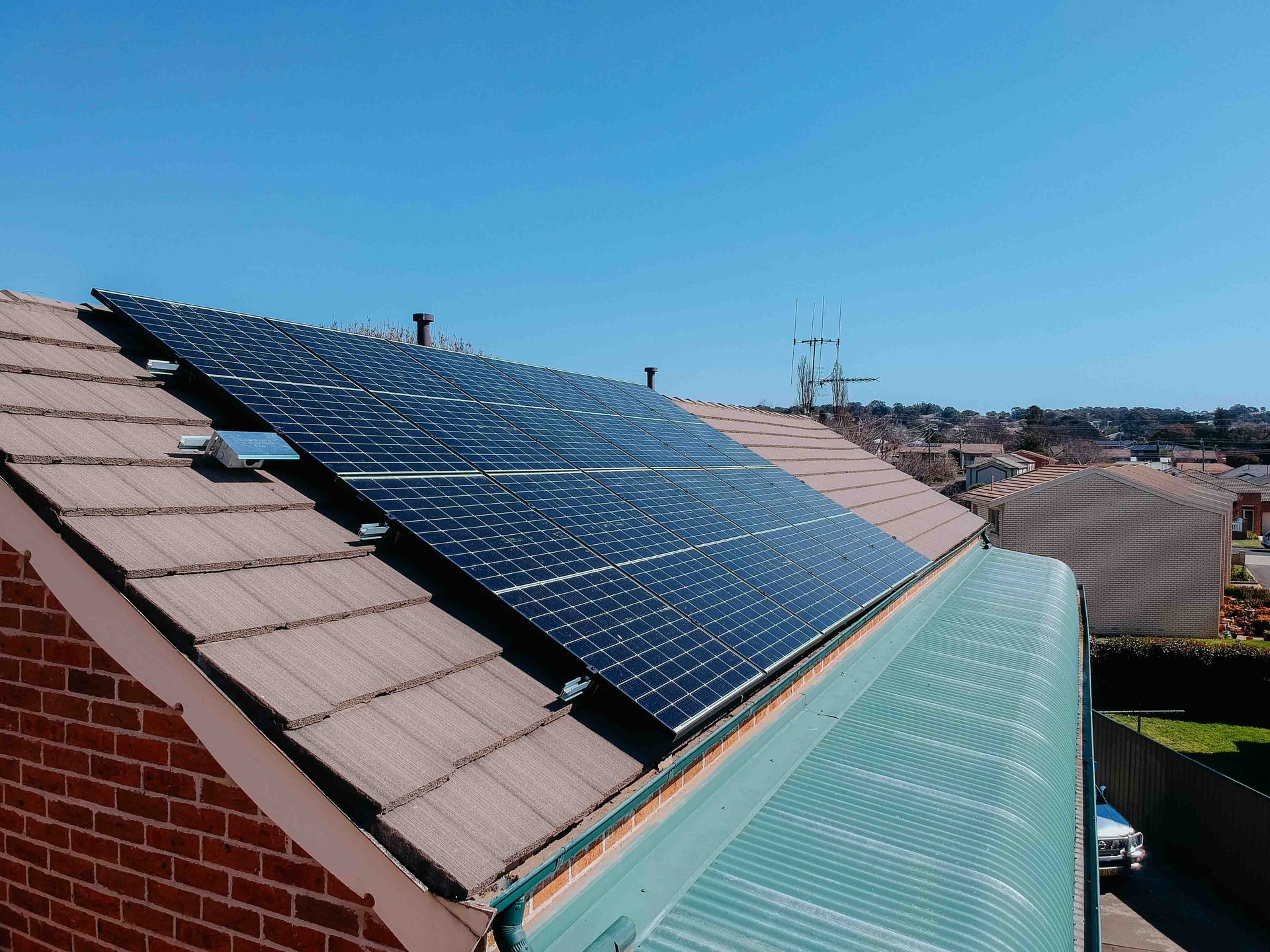
Search for a solar installer around Bowral, Mittagong or Moss Vale and you'll get a list of companies. What you won't get is much help working out which of them have actually specified a system for a property at 690 metres, with frost through winter, on the Endeavour Energy network. Those three facts are what separate a Highlands quote from a Sydney one, and most quotes don't mention any of them.
This guide covers what's genuinely different about solar in the Southern Highlands and what to ask before you sign. For the general installer-vetting checklist — accreditation, warranties, subcontracting — see our guide to choosing a CEC-accredited installer; this page assumes you've read that and focuses on the regional specifics.
Altitude and cold: better for panels than you'd think
Bowral sits at roughly 690 metres, and frost is common through the Highlands winter. Homeowners often assume that means solar underperforms here. It's the opposite, at least for the panels themselves.
Solar panels are rated at a cell temperature of 25°C. Above that they lose output; below it they gain. A cold, clear Highlands winter day is close to ideal panel weather — the limiting factor in winter isn't temperature, it's the shorter day and the lower sun angle. What that means practically:
- Winter output is driven by daylight hours and tilt, not by cold. Don't accept a quote that discounts your generation estimate "because it's cold up there" — that isn't how the physics works.
- Frost and the occasional snowfall are a mounting question, not a panel question. Rail spans, clamp placement and roof penetrations need to suit the load; glass and frames handle frost fine.
- Morning fog sits in the Highlands valleys. If your block is in a hollow rather than on a rise, a west-leaning array can outperform a textbook north-facing one, because it captures the afternoon instead of a fogged-in morning. This is a site-inspection question, not a satellite-image one.
You're on Endeavour Energy, not Evoenergy or Essential
The Southern Highlands is in Endeavour Energy's distribution area, which also covers Greater Western Sydney, the Blue Mountains and the Illawarra. That matters because grid connection rules — the application process, inverter approval, and how much you're permitted to export — are set by the distributor, not the retailer and not the state.
So a Highlands install follows different paperwork to our Canberra and Queanbeyan jobs, and an installer whose experience is all metro-Sydney-retailer or all-ACT won't necessarily have it right. Export limits in particular are set per connection and can be revised, so rather than quote a figure that may be out of date by the time you read this, the honest advice is: ask your installer to confirm your specific site's export limit with Endeavour as part of the quote, in writing. If a system is sized on the assumption of unlimited export and your connection turns out to be capped, the payback numbers in that quote are wrong.
This is also the single best reason to take a battery seriously in the Highlands rather than dismissing it. Where export is capped, storing your midday surplus is worth considerably more than exporting it — our battery storage guide works through when the numbers stack up and when they don't.
What it costs
Island Solar quotes Highlands work off the same real, fitted rate we use across our whole NSW and ACT service area — $824/kW installed for panels, inverter, mounting and commissioning, plus roughly $429/kWh if you add a battery. Those rates come from our own completed jobs, not a marketing round number. The full derivation and worked examples by size are in our pricing breakdown.
| System size | Typical Highlands property | Indicative cost |
|---|---|---|
| 6.6 kW | Village cottage or townhouse | $5,438 |
| 10 kW | Family home on a standard block | $8,240 |
| 13.2 kW | Larger home, or one with reverse-cycle heating | $10,877 |
| 20 kW | Acreage, multiple buildings or a shed load | $16,480 |
Federal and NSW incentives change from year to year and are applied at the quote stage, so we haven't baked a rebate figure into the table above. Our rebates and STCs guide explains how the schemes work and what to check is current when you're comparing quotes.
The load that actually sizes a Highlands system
The Highlands has a genuine heating season, and how you heat is the biggest single input into what size system makes sense.
- Reverse-cycle heating puts a large, mostly-daytime electrical load on the house exactly when solar output is at its weakest point in the year. It pushes system size up, and it's the case where a battery earns its keep fastest.
- Wood, gas or oil heating leaves your electrical load much flatter year-round. A smaller system sized to your baseline usage will usually give the better return.
- Electrifying later — swapping a gas cooktop, adding a heat pump or buying an EV — is worth telling your installer about up front. Leaving inverter headroom and switchboard space now is far cheaper than a second visit.
If you want to work through the sizing logic before anyone comes out, our residential sizing guide covers how to read your own bill and match a system to it.
Get a Southern Highlands quote
Free site inspection, fixed itemised quote, CEC-accredited crew. Bowral, Mittagong, Moss Vale, Bundanoon, Robertson, Berrima and surrounds.
Acreage and rural blocks
A lot of Highlands property isn't a suburban roof. If you're on acreage with a shed, a pump, a studio or a second dwelling, a few things change:
- Three-phase supply is common on larger rural blocks and changes inverter selection and the connection application.
- Ground or shed mounting is often better than the house roof — more room, a free choice of orientation and tilt, and no working around a heritage or complex roofline.
- Cable runs between buildings cost real money and lose real energy. Where the array goes relative to where the load is should be a deliberate decision, not whichever roof is easiest to reach.
- Outage exposure is higher at the end of a rural feeder than in the middle of town. If you want the lights to stay on, say so early — backup capability has to be designed in, and not every inverter and battery combination provides it.
Five questions worth asking any Highlands installer
- Will you confirm my site's export limit with Endeavour Energy in writing before I sign?
- Is the generation estimate in this quote based on an actual site inspection, including shading and fog exposure, or a satellite image?
- Who physically does the install — your own crew, or a subcontractor?
- What mounting hardware are you using, and is it specified for frost and the wind loading at my address?
- If I add a battery or an EV charger in three years, does this inverter and switchboard leave room for it?
Any installer worth hiring will answer all five without hedging. We service the Southern Highlands as part of our broader NSW and ACT coverage, alongside Canberra, Queanbeyan and the South Coast — call 0422 292 551 or request a quote and we'll book a site inspection.